The State of App Mascots in 2026
A trend report on how modern apps use mascots for trust, onboarding, personalization, and brand differentiation.
Quick Answer
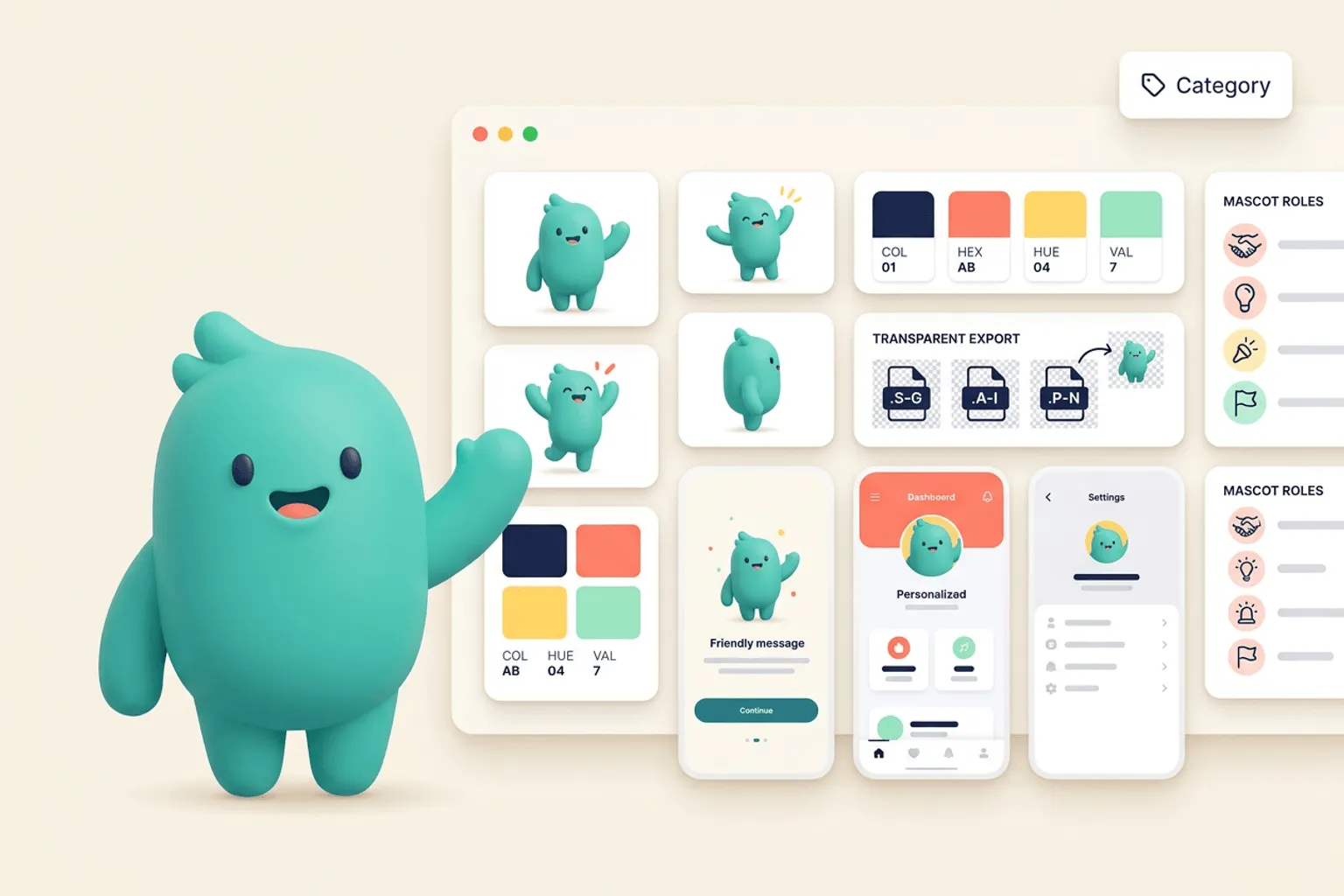
Core idea: In 2026, app mascots are shifting from homepage decoration to flexible product companions that appear across UI, content, and lifecycle marketing.
- Mascots are becoming smaller, more modular, and more useful inside product flows.
- The winning style is clear and ownable, not overly detailed or generic.
- AI workflows make consistent pose libraries more accessible to small teams.
Mascots are moving inside the product
The old mascot pattern was a large homepage illustration and maybe a sticker pack. Modern app mascots are more practical. They appear in empty states, upgrade moments, onboarding tasks, changelog images, help center graphics, and dashboard celebrations. The character works because it is close to the user’s actual journey.
This is partly a distribution shift. Product-led growth means more communication happens inside the app, not only in ads. A character that can explain, encourage, or recover from friction is useful product surface area.
If you want to learn more about app mascots 2026, read App Mascot Examples: Patterns Product Teams Can Reuse next. Where to Place a Mascot in Your App is also useful when you are mapping the same mascot system across product and marketing.
Consistency matters more than realism
AI image tools made it easy to generate charming one-off characters. They also made inconsistency more obvious. The products that feel polished are the ones that constrain their mascot system: same proportions, same palette, same SVG-friendly geometry, and a recognizable personality across every pose.
That is why SVG export and transparent backgrounds matter. Teams need assets that can move from web UI to pitch decks to email headers without rebuilding everything by hand.
If you want to learn more about applying this idea in a real product workflow, Best Brand Mascots: What Software Teams Can Learn From Memorable Characters is a practical next step.
The strongest mascots have utility
A 2026 mascot should answer a question: what can this character do that our logo cannot? The answer might be emotional range, onboarding guidance, social content, a memorable product tour, or a set of launch visuals. If the mascot cannot help communication, it will feel decorative.
Plan your mascot like a product component. Give it states, variants, constraints, and usage examples. Then let it carry repeated product moments instead of asking every page to invent a new visual idea.
Implementation Checklist
Use this checklist before publishing the mascot assets. It keeps the character useful across the product instead of turning it into a one-page illustration.
- Audit your empty states and onboarding screens for character opportunities.
- Replace decorative hero art with reusable mascot moments.
- Keep asset formats flexible: SVG, transparent PNG, and motion-ready layers.
- Review style drift every time you add a new batch of poses.
How to Think About App Mascots in 2026
This longer-form guide is for teams planning modern product identity and engagement systems. The goal is to understand why mascot systems are moving from decorative art to reusable product infrastructure. As more interfaces become visually similar, distinctive character systems help products feel memorable without making every screen noisy. The 2026 shift is toward useful, consistent, production-ready mascots.
The practical question is not whether the mascot is cute. The practical question is whether it helps people understand, remember, or complete something that matters. A strong mascot system should make the next asset easier to create, not harder.
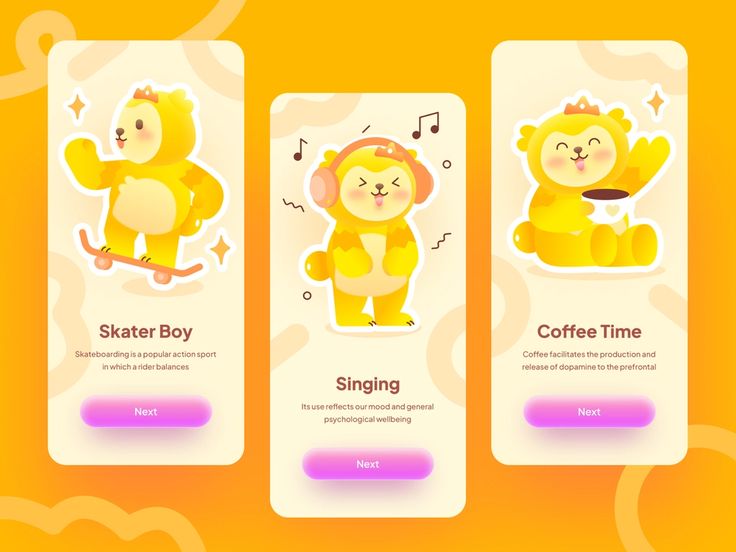
Mascot Character Design on Pinterest. The mobile UI character reference fits the 2026 pattern: mascots designed as reusable product moments, not isolated art.
Build the System Before You Polish the Moment
Mascots are becoming systems
The strongest app mascots now ship as pose libraries, transparent assets, style presets, and rules. Teams need characters that can support onboarding, empty states, support, social, and lifecycle messages.
AI raises the bar for consistency
Because generating one cute character is easier than ever, consistency becomes the differentiator. A serious mascot workflow must preserve proportions, colors, expression logic, and export quality.
Product usefulness beats decoration
Modern mascots succeed when they reduce friction, make product states clearer, and create memory. Decorative mascots that do not help users will be removed from serious interfaces.
What to Notice in the Pinterest Reference
Use Pinterest as a research board, not as a source to copy. The goal is to notice the design decisions that make a character usable across contexts, then translate those decisions into your own brand system.
- Look for product-specific placements instead of generic character art.
- Notice whether the mascot can become part of a UI system.
- Ask how quickly a team could create the next matching pose.
Common Mistakes to Avoid
- Treating mascots as a homepage trend.
- Using AI-generated characters without consistency controls.
- Ignoring accessibility, file size, and placement rules.
Production Checklist
- Build a pose library, not a single illustration.
- Use transparent production-ready files.
- Document style and placement rules.
- Measure whether mascot moments improve user comprehension.
How to Measure Whether It Worked
Treat the mascot like a product asset. Once it ships, review whether it improves clarity, recognition, speed, or reuse. The most useful metrics for this article are:
- Pose reuse across product surfaces
- Activation or engagement lift
- Brand recognition in crowded categories
- Speed of producing new matching assets
Create a mascot that belongs inside your product
Generate consistent SVG mascot poses for onboarding, support, empty states, and launch campaigns.
Create Your Mascot