Animated Mascots for Social Media: Planning Loops That Still Look Like Your Brand
Create mascot-led launch posts, short loops, and social visuals without drifting away from your product identity.
Quick Answer
Core idea: Social mascot content performs best when it repeats a recognizable character in simple, useful, high-contrast moments.
- Use short loops with one clear action instead of busy scenes.
- Keep mascot proportions and colors identical to product assets.
- Build social templates so launch graphics become faster over time.
Design for quick recognition
Social feeds are fast. Your mascot needs to be recognized before the user reads the caption. Use a clear silhouette, large character placement, and one action per post: waving, pointing, celebrating, holding a sign, or reacting to a product update.
Avoid overstuffed scenes. The mascot should carry attention, while the text explains the launch, feature, or story.
If you want to learn more about animated mascots social media, read How to Animate a Mascot Without Losing Brand Consistency next. The Mascot Marketing Growth Effect: Why Character Systems Make Apps Easier to Remember is also useful when you are mapping the same mascot system across product and marketing.
Create repeatable post types
A mascot becomes more valuable when it supports templates. Create reusable layouts for launch day, changelog, customer quote, behind-the-scenes, error fixed, milestone, and waitlist update posts. Each template can use a different pose while keeping the same brand frame.
This gives your social presence continuity without requiring a new creative direction every week.
If you want to learn more about applying this idea in a real product workflow, Mascots for Indie Hackers: Small Brand Assets That Compound is a practical next step.
Keep motion simple
For short loops, one movement is usually enough. A wave, bounce, blink, nod, or confetti gesture can add life without making the post feel chaotic. The goal is to make the brand feel active, not to create a full animated short.
Start from static svgapp poses, then animate the parts that matter for the message.
Implementation Checklist
Use this checklist before publishing the mascot assets. It keeps the character useful across the product instead of turning it into a one-page illustration.
- Use one mascot action per social post.
- Keep brand colors and mascot proportions consistent.
- Create templates for recurring launch and update formats.
- Use subtle motion that loops cleanly.
How to Think About Animated Mascots for Social Media
This longer-form guide is for small marketing teams turning one mascot into a repeatable social content format. The goal is to build a lightweight motion system that can ship often without making every post feel like a custom production. Social channels reward repeatable recognition. A mascot can become a visual hook, but only if the team can produce variations quickly and keep the character recognizable across crops, captions, and platform formats.
The practical question is not whether the mascot is cute. The practical question is whether it helps people understand, remember, or complete something that matters. A strong mascot system should make the next asset easier to create, not harder.
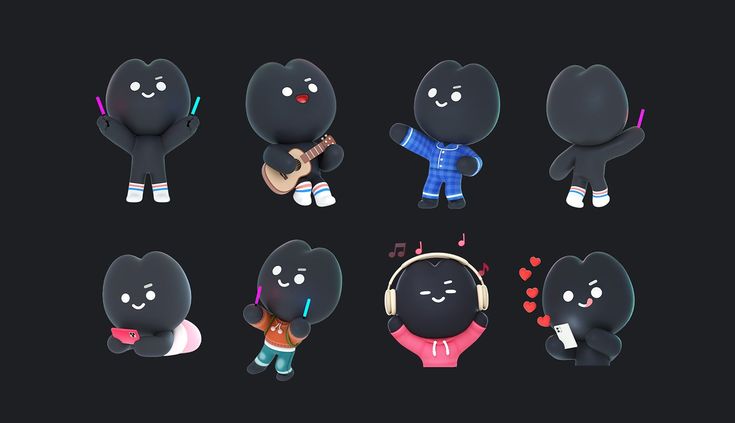
Character branding pose set on Pinterest. This pin is useful because it shows a character treated as a family of repeatable moments, which is the foundation for social templates.
Build the System Before You Polish the Moment
Design for repeated formats
Start with the post types you can sustain: launch announcement, tip carousel, feature teaser, bug-fix celebration, milestone, founder note, and customer quote. Each format needs a mascot role. Sometimes the mascot points, sometimes it reacts, and sometimes it becomes the recurring sticker that makes the post recognizable in a crowded feed.
Keep animation tiny and purposeful
The best social mascot motion is often simple: a wave, blink, bounce, confetti pop, typing loop, or head turn. Overproduced animation slows the content calendar. Small loops are easier to adapt to square, vertical, and story crops.
Separate character continuity from campaign art
Your campaign backgrounds can change every week, but the mascot should keep stable proportions, color rules, and facial language. This is what makes the character feel like an owned brand asset instead of a decorative sticker pack.
What to Notice in the Pinterest Reference
Use Pinterest as a research board, not as a source to copy. The goal is to notice the design decisions that make a character usable across contexts, then translate those decisions into your own brand system.
- Watch how each pose has a clear emotion that could map to a post type.
- Check whether the character would still read when cropped tightly.
- Look for props that can change without changing the character identity.
Common Mistakes to Avoid
- Making one elaborate animation that cannot be adapted into future posts.
- Changing the character style whenever a new campaign starts.
- Using motion when a static reaction pose would communicate faster.
Production Checklist
- Create square, vertical, and wide-safe versions of every recurring pose.
- Name files by channel and use case.
- Use motion loops under a few seconds for reusable social templates.
- Keep captions focused on the product message, not the mascot itself.
How to Measure Whether It Worked
Treat the mascot like a product asset. Once it ships, review whether it improves clarity, recognition, speed, or reuse. The most useful metrics for this article are:
- Scroll stop rate on mascot-led posts
- Template reuse frequency
- Comments or saves on educational mascot posts
- Production time per social asset
Create mascot assets for repeatable social content
Generate consistent character poses for launch posts, changelogs, milestones, and founder-led updates.
Create Your Mascot