
The Mascot Marketing Growth Effect: Why Character Systems Make Apps Easier to Remember
A practical guide to using mascots for brand recall, onboarding, conversion, and product storytelling without turning your app into a cartoon.
Quick Answer
Core idea: Mascot marketing works when the character becomes a repeatable system: one recognizable face, many useful product moments, and a clear reason to appear.
- A mascot is strongest when it repeats across onboarding, empty states, launches, help docs, and social posts.
- The goal is not cuteness. The goal is memory, trust, and faster comprehension.
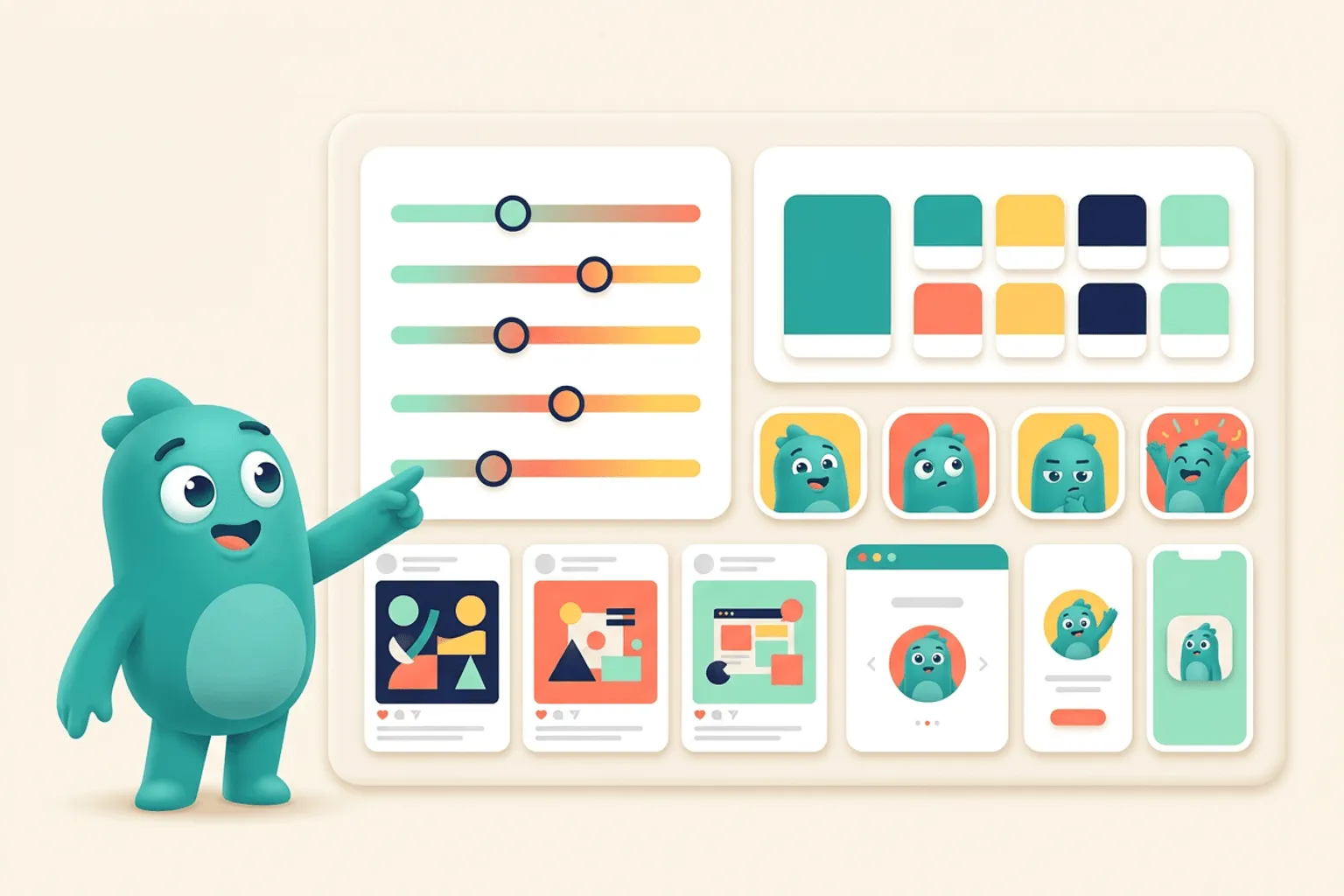
- svgapp helps teams create the same mascot in many poses so the character can become a system instead of a one-off illustration.
Why mascots make software more memorable
Most app screens are built from the same ingredients: navigation, cards, tables, forms, buttons, and pricing copy. A mascot gives people a visual anchor that survives after the details blur. When users remember the helpful character from onboarding or the calm illustration in a failure state, they are remembering the brand in a more human form.
That memory effect is especially useful for young products. Early-stage teams rarely have the distribution budget of established competitors, so their creative system has to do more work. A mascot gives the brand a repeatable signal that can show up in product UI, support, release notes, launch graphics, and founder-led posts.
- Use the mascot where emotion is already present: welcome, confusion, progress, success, and recovery.
- Keep the silhouette and palette stable so recognition compounds.
- Create multiple poses before launch so the mascot does not feel trapped in one hero image.
If you want to learn more about mascot marketing, read Brand Mascot Guide: How to Design a Character People Actually Associate With Your Product next. Where to Place a Mascot in Your App is also useful when you are mapping the same mascot system across product and marketing.
Where mascot marketing should appear first
Start with moments that need interpretation. A pricing page does not need a mascot every few inches, but an onboarding checklist, invite screen, empty dashboard, or generated-result celebration can benefit from a friendly visual cue. The mascot should make the next action feel clearer, not simply decorate the layout.
Example: Duolingo Landing Page
The fastest path is to build a small pose library: greeting, pointing, thinking, celebrating, fixing, and resting. Those six states cover most early product and marketing needs. svgapp is designed around that exact problem: keeping the same character consistent while you generate enough variations to use it everywhere.
If you want to learn more about applying this idea in a real product workflow, Mascots for SaaS: Product Moments That Benefit From a Character is a practical next step.
How to measure whether it is working
Mascot marketing is not magic, so treat it like a brand experiment. Compare landing page engagement before and after the character appears in key sections. Watch whether social posts with character-led creative get more saves or replies. Ask new users what they remember from your homepage after a demo call.
The qualitative signal matters too. If customers start naming the character, referencing it in support messages, or recognizing it in small crops, your mascot is becoming an owned asset rather than a passing visual trend.
Implementation Checklist
Use this checklist before publishing the mascot assets. It keeps the character useful across the product instead of turning it into a one-page illustration.
- Define the job of the mascot before generating poses.
- Create a stable color palette and silhouette.
- Use the character in product moments where the user needs guidance.
- Review analytics and customer language after shipping the first set of assets.
How to Think About Mascot Marketing
This longer-form guide is for founders and product marketers using a character to support growth loops. The goal is to turn mascot assets into repeatable marketing moments that build memory over time. Mascot marketing works when the character appears consistently across acquisition, activation, retention, and referral moments. A single campaign asset is not enough to create compounding recognition.
The practical question is not whether the mascot is cute. The practical question is whether it helps people understand, remember, or complete something that matters. A strong mascot system should make the next asset easier to create, not harder.

AR Brand Mascot Animation on Pinterest. The animated brand mascot reference is useful for thinking about a character as a recurring campaign signal.
Build the System Before You Polish the Moment
Connect the mascot to the growth loop
Map where users first see the brand, what convinces them to try it, what brings them back, and what they share. Each stage can use a different mascot pose while keeping the same character identity.
Make recognition the goal
The mascot does not need to explain every feature. Its job is to make the brand easier to recognize and make repeated messages feel connected. Repetition across channels is what creates the growth effect.
Create campaign-safe variations
Marketing teams need assets for ads, social, landing pages, email headers, launch posts, and milestones. Build the mascot as transparent pieces that can sit on many layouts without being redrawn.
What to Notice in the Pinterest Reference
Use Pinterest as a research board, not as a source to copy. The goal is to notice the design decisions that make a character usable across contexts, then translate those decisions into your own brand system.
- Notice the character’s immediate emotional read.
- Ask how a similar asset could appear in ads and product screens.
- Look for simplicity that would survive repeated exposure.
Common Mistakes to Avoid
- Using the mascot in one campaign and then abandoning it.
- Changing the character’s look to match every trend.
- Optimizing for cuteness instead of repeatable memory.
Production Checklist
- Map mascot poses to acquisition, activation, retention, and referral.
- Create reusable campaign exports.
- Use consistent naming and palette rules.
- Review performance by channel, not by taste alone.
How to Measure Whether It Worked
Treat the mascot like a product asset. Once it ships, review whether it improves clarity, recognition, speed, or reuse. The most useful metrics for this article are:
- Ad recall and click-through
- Social saves and shares
- Email engagement on mascot-led headers
- Brand recognition in user interviews
Turn mascot marketing into a reusable asset system
Create one consistent SVG mascot, then generate the poses you need for onboarding, launches, support, and social content.
Create Your Mascot