Brand Mascot Guide: How to Design a Character People Actually Associate With Your Product
Learn how to plan a brand mascot from audience, personality, silhouette, color, poses, and usage rules.
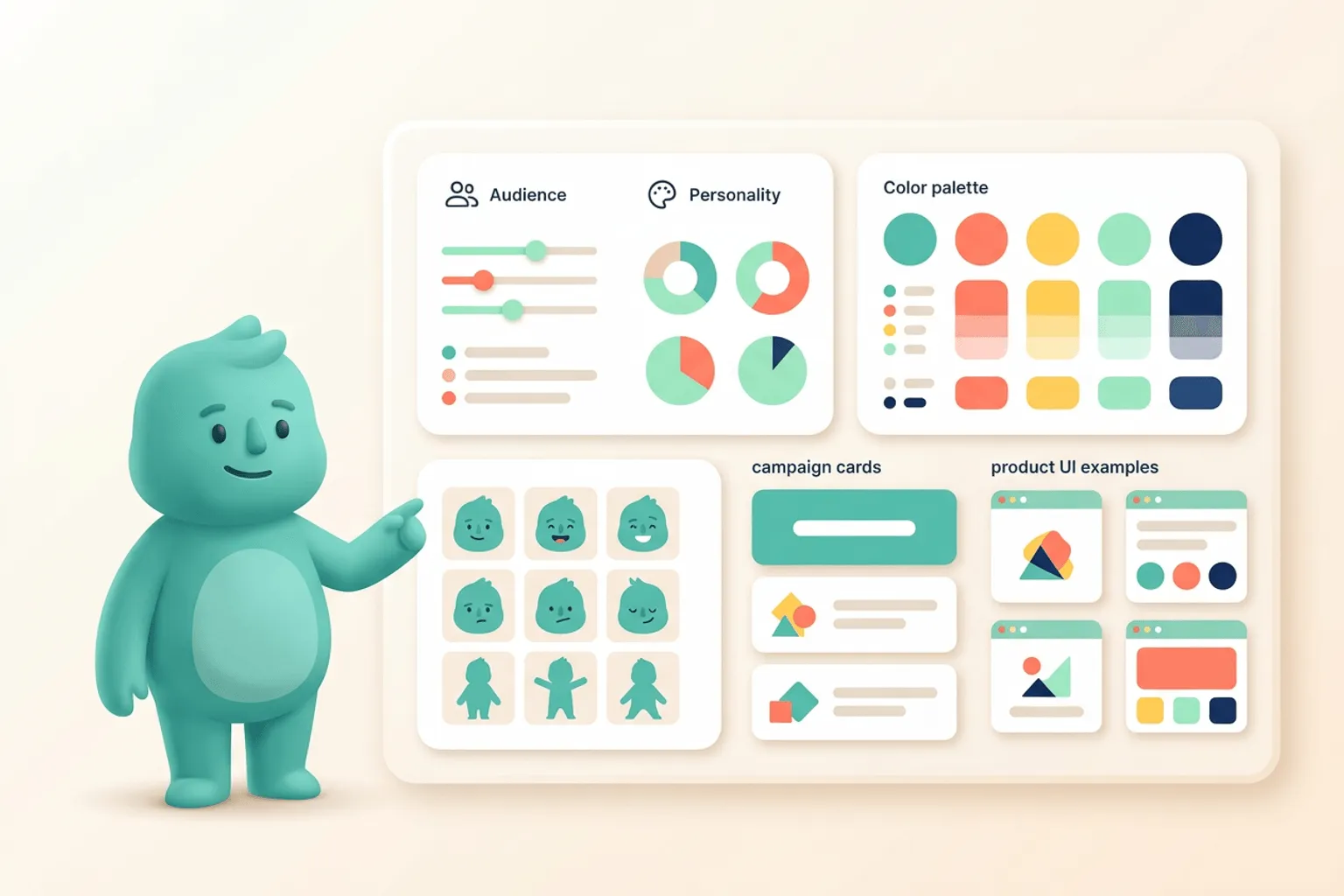
Quick Answer
Core idea: A brand mascot becomes valuable when it has a clear personality, a repeatable visual grammar, and enough poses to support real product communication.
- A mascot should express your brand personality more clearly than another abstract shape could.
- Design the rules before scaling the asset: silhouette, palette, line weight, mood, and behavior.
- Treat the first mascot pack like a miniature brand system, not a single illustration.
Start with the brand behavior, not the species
Teams often begin with the question, should our mascot be a fox, robot, cat, or blob? That is fun, but it is not the first strategic decision. Begin with behavior. Is your product a patient guide, a clever assistant, a fast-moving sidekick, or a calm expert? The character type should follow the behavior you need users to feel.
A finance product might need a mascot that feels careful and competent. A creative tool can be more expressive. A developer utility may need a mascot that is useful in documentation, bug states, and release notes. Once the behavior is clear, the character choice becomes easier.
If you want to learn more about brand mascot, read How to Create a Mascot for Your App next. Brand Personality Guide for Mascots: Turning Tone Into a Visual Character is also useful when you are mapping the same mascot system across product and marketing.
Build rules that keep the mascot recognizable
The most common failure mode is inconsistency. A mascot is generated once for the homepage, then every future asset drifts in proportions, color, expression, and detail level. Users do not get a consistent mental image, and the brand loses the compounding effect.
Create rules for the head-to-body ratio, eye shape, color balance, accessories, line weight, and allowed expressions. In svgapp, use reference images and style constraints to keep each new pose aligned with the original direction.
- One primary silhouette users can recognize quickly.
- Two to four core colors that survive dark and light backgrounds.
- A short behavior guide: what the mascot would and would not do.
Example: Duolingo Mascot System
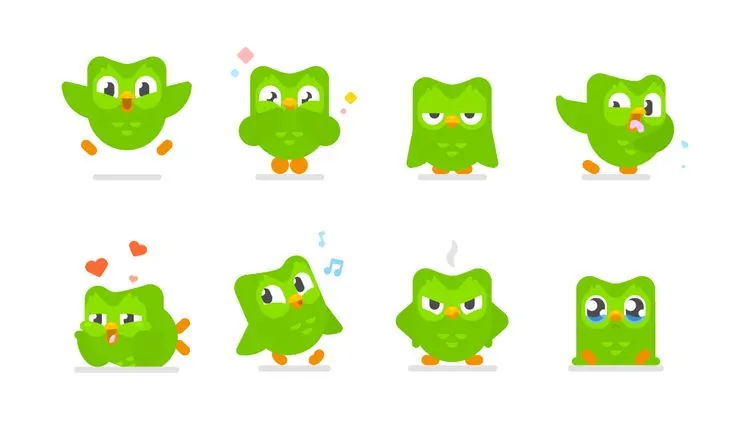
Duolingo’s mascot system works because Duo keeps a stable silhouette, color language, and personality while flexing across many poses and product moments. That consistency makes each new expression feel like part of the same character, so the mascot builds recognition instead of becoming a one-off illustration.
If you want to learn more about applying this idea in a real product workflow, Mascot vs Logo: When Your App Needs a Character Instead of Another Mark is a practical next step.
Plan the first ten poses
A brand mascot needs range. The first ten poses should cover the emotional map of your product: greeting, learning, searching, helping, building, waiting, celebrating, apologizing, explaining, and inviting. This range gives marketers and product designers enough material to place the mascot without forcing it into the wrong mood.
When you create that range early, the mascot starts acting like a visual language. It can help a landing page explain value, help a product soften friction, and help social posts feel instantly connected to the brand.
Implementation Checklist
Use this checklist before publishing the mascot assets. It keeps the character useful across the product instead of turning it into a one-page illustration.
- Write three adjectives that describe the character’s behavior.
- Choose a simple visual anchor users can recognize at small sizes.
- Create pose rules before making dozens of variations.
- Document where the mascot should not appear.
How to Think About Brand Mascot Systems
This longer-form guide is for teams turning a character idea into a long-term brand asset. The goal is to build a mascot that can scale from launch art into product, marketing, support, and social use. A brand mascot is not finished when the first illustration looks good. It needs a system of poses, rules, and use cases so the character stays recognizable as more people use it.
The practical question is not whether the mascot is cute. The practical question is whether it helps people understand, remember, or complete something that matters. A strong mascot system should make the next asset easier to create, not harder.

Build the System Before You Polish the Moment
Define the mascot’s job
Before designing ears, eyes, or props, decide what the mascot does for the brand. It might make a technical product feel approachable, make a consumer app more memorable, or give a community a shared visual identity.
Create the first pose library
A practical brand mascot starts with six poses: neutral, welcome, explain, think, celebrate, and recover. This set covers most early marketing and product needs while revealing whether the character is flexible enough.
Write rules for future users
Mascots spread quickly across decks, ads, docs, and landing pages. Write clear rules about scale, color, emotion, props, background, and copy tone so every team can use the mascot without reinventing it.
What to Notice in the Pinterest Reference
Use Pinterest as a research board, not as a source to copy. The goal is to notice the design decisions that make a character usable across contexts, then translate those decisions into your own brand system.
- Look for how the mascot interacts with brand colors.
- Notice whether the character has multiple states, not only one hero pose.
- Pay attention to the balance between charm and consistency.
Common Mistakes to Avoid
- Approving a mascot without testing it in product UI.
- Letting every team commission its own variant.
- Using a mascot without defining tone boundaries.
Production Checklist
- Create a small expression sheet.
- Generate transparent assets for common placements.
- Document color, scale, and emotion rules.
- Review every new pose against the original silhouette.
How to Measure Whether It Worked
Treat the mascot like a product asset. Once it ships, review whether it improves clarity, recognition, speed, or reuse. The most useful metrics for this article are:
- Asset reuse across teams
- Design review time for new mascot moments
- Brand recognition in surveys
- Consistency of exports across channels
Design your mascot as a system from day one
svgapp helps you move from one mascot concept to a consistent library of production-ready character poses.
Create Your Mascot