Mascots for Indie Hackers: Small Brand Assets That Compound
How indie hackers can use mascots to make launches, landing pages, changelogs, and social updates more memorable.
Quick Answer
Core idea: For indie hackers, a mascot is a lightweight brand asset that can repeat across every public touchpoint.
- A mascot gives a small product a recognizable visual signature.
- Use it in the places indie hackers already publish: landing pages, updates, demos, and emails.
- Consistency matters more than a huge illustration budget.
Use the mascot as a public build companion
Indie hackers publish constantly: screenshots, learnings, shipped updates, revenue milestones, bug fixes, and launch posts. A mascot can become the visual thread across those moments. It gives followers a faster way to recognize your product in the feed.
This is useful even before the brand is mature. A consistent character can make a tiny product feel more intentional.
If you want to learn more about mascot for indie hackers, read Animated Mascots for Social Media: Planning Loops That Still Look Like Your Brand next. Mascots for Solopreneurs: A Friendly Brand System Without a Design Team is also useful when you are mapping the same mascot system across product and marketing.
Prioritize reusable moments
Create poses for shipping, thinking, debugging, celebrating, and inviting feedback. These map neatly to the rhythm of building in public. You can reuse them in blog thumbnails, changelog cards, and email headers.
Avoid highly specific illustrations that only work once. The value is repetition.
If you want to learn more about applying this idea in a real product workflow, The Mascot Marketing Growth Effect: Why Character Systems Make Apps Easier to Remember is a practical next step.
Keep costs and complexity low
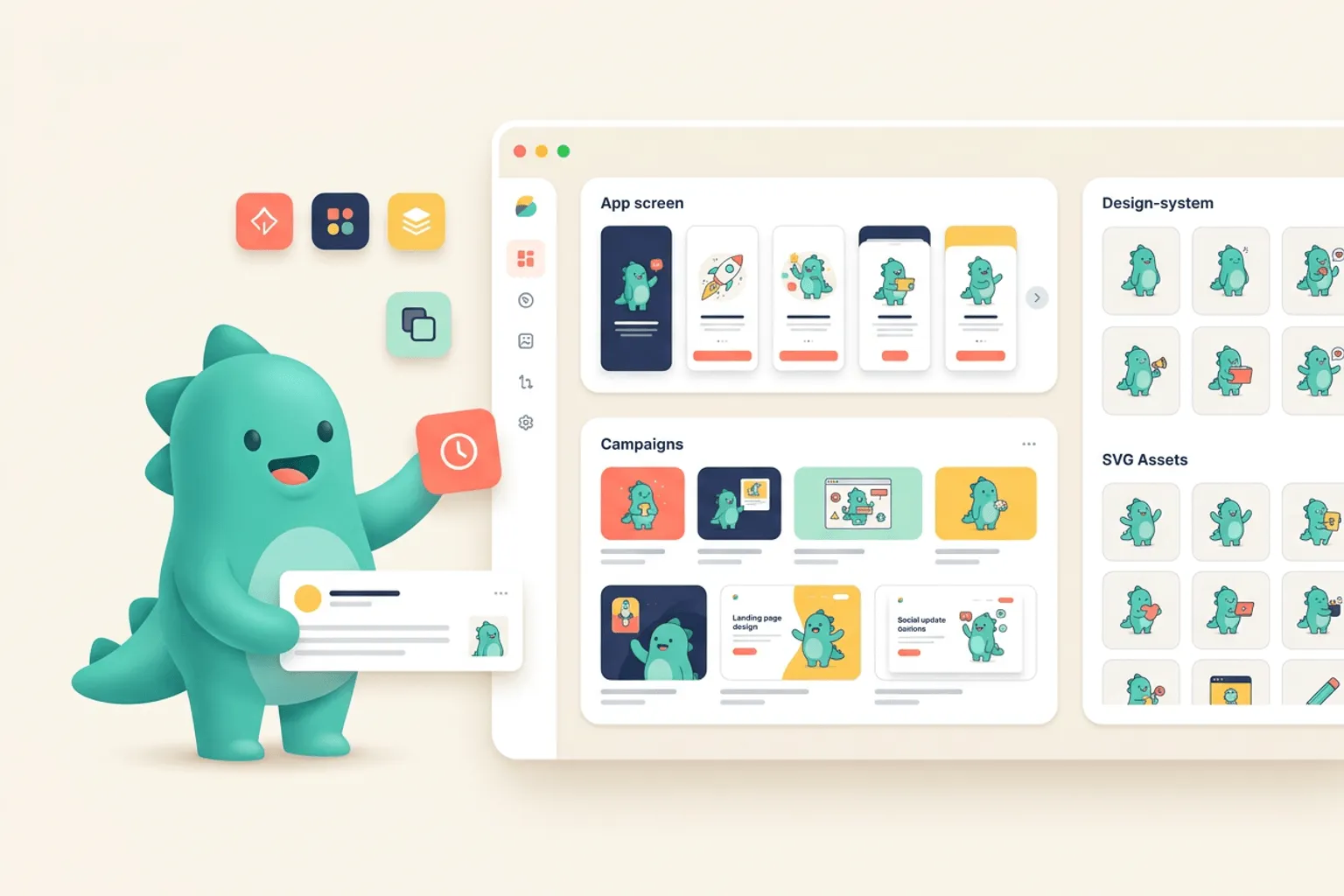
A mascot system does not need a massive budget. Start with a focused svgapp pack, place it in real content, and expand only when the character proves useful. This keeps the brand flexible while still creating memory.
The best indie mascot is the one you actually use every week.
Implementation Checklist
Use this checklist before publishing the mascot assets. It keeps the character useful across the product instead of turning it into a one-page illustration.
- Create launch, changelog, milestone, and feedback poses.
- Use the mascot in newsletter and social templates.
- Keep the character visually simple enough for fast reuse.
- Expand the pose library based on recurring content needs.
How to Think About Mascots for Indie Hackers
This longer-form guide is for small builders growing products in public with limited design time. The goal is to create a memorable visual companion that supports shipping, storytelling, and community updates. Indie products often compete on personality as much as features. A mascot gives the project a recognizable signal that can show up in changelogs, launch posts, docs, and tiny product moments.
The practical question is not whether the mascot is cute. The practical question is whether it helps people understand, remember, or complete something that matters. A strong mascot system should make the next asset easier to create, not harder.

AR Brand Mascot Animation on Pinterest. The small robot-style character is a useful reference for a compact product companion that can work across many updates.
Build the System Before You Polish the Moment
Design for public building
A mascot can react to shipped features, outages, milestones, revenue updates, and user feedback. That turns routine updates into a recognizable series and helps followers remember the product.
Keep the asset set small
Indie hackers need leverage, not a giant brand program. Start with five transparent poses and a simple social template. Reuse them until the audience recognizes the character.
Let the mascot support the builder voice
If the founder’s tone is direct and practical, the mascot should not become overly cute or theatrical. It should amplify the voice, not replace it.
What to Notice in the Pinterest Reference
Use Pinterest as a research board, not as a source to copy. The goal is to notice the design decisions that make a character usable across contexts, then translate those decisions into your own brand system.
- Look for compact shapes that survive small avatar sizes.
- Notice whether the character can be used as a reaction image.
- Ask how the mascot could appear in build-in-public updates.
Common Mistakes to Avoid
- Overdesigning a mascot before validating the product.
- Using a style that is hard to recreate quickly.
- Letting the mascot distract from shipping proof.
Production Checklist
- Create five reusable poses.
- Build one launch template and one changelog template.
- Use the mascot consistently for at least one month.
- Save prompts and exports where future-you can find them.
How to Measure Whether It Worked
Treat the mascot like a product asset. Once it ships, review whether it improves clarity, recognition, speed, or reuse. The most useful metrics for this article are:
- Recognition in replies and comments
- Post template reuse
- Click-through from mascot-led updates
- Time required to create each new visual
Create a mascot that can ship with every update
Generate reusable SVG mascot poses for launches, changelogs, newsletters, and build-in-public posts.
Create Your Mascot